

You told your team to take breaks this quarter. You sent the Slack message about sustainable pace. You nodded along in the all-hands when the HR Director talked about psychological safety.
And then you worked until midnight. Again.
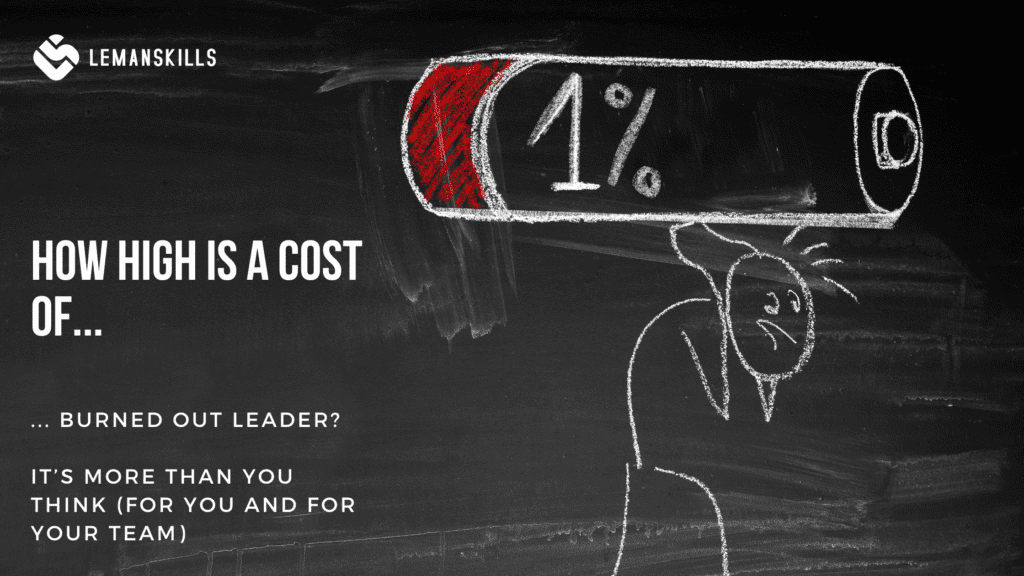
This is the uncomfortable territory that most leadership content skips over, the burnout that doesn’t look like collapse. The kind that shows up in a leader who is still delivering, still showing up, still holding it together. Except internally? The tank is almost empty.
This article is the companion piece to Episode 155 of the Leman Tech Leadership Podcast and this week’s Leadership Pulse newsletter on leader burnout. If the newsletter resonated, this is where we go deeper.
The Number That Should Stop You in Your Tracks
56% of leaders report feeling burned out, and that number has been climbing year over year. (High5 Test, 2025) That means more than half the people who are supposed to be setting direction, holding culture, and protecting their teams’ performance are running on fumes while doing it.
And here’s the thing nobody talks about: for leaders, burnout almost never looks like burnout. It looks like the opposite.
There’s a term for this: shadow burnout. It’s when persistent exhaustion, cynicism, and reduced capacity coexist with high performance. The targets are still being met. The meetings still happen. The emails still go out. But internally, the person is depleting, and the signs are showing up in ways that are easy to dismiss as “just a hard quarter.” (Cerevity, 2025)
Sound familiar?
What Leader Burnout Actually Looks Like (It’s Not What You Think)
Individual contributors who burn out tend to go quiet. They miss things. You notice.
Leaders who burn out tend to go louder. They accelerate. They compensate. They perform.
Here are the patterns I see repeatedly in my coaching work with IT and technology team leaders:
- You’re overexplaining in 1:1s. Not because the person needs it, but because anxiety about things falling apart is driving your communication.
- You’re saying yes to things you should delegate. Not because no one else can do them, but because stopping feels more dangerous than continuing.
- You’re skipping recovery. Lunches at the desk. No real weekends. Evenings “just catching up.” The tank empties a little more each week.
- You’re telling your team to protect their energy. While privately you haven’t had a full day off in months.
That last one is the most costly. Not just to you, but to your team.
Your Distress Is a Team Problem, Not a Personal One
In the Process Communication Model (PCM) framework that I use with my clients, every personality type has a predictable distress sequence — a specific way their communication changes when their motivational needs are not being met. When you’re running on empty, you’re not just tired. You’re in distress. And your distress has a signature.
If your Base is Thinker or Persister, depletion tends to look like perfectionism and over-control. Nothing is quite good enough. Details that didn’t matter before suddenly matter a lot.
If your Base is Harmonizer, or Imaginer, depletion often looks like passive overwhelm. You absorb everyone else’s stress. You struggle to say no. Decisions slow down.
If your Base is Rebel or Promoter, depletion often looks like urgency and crisis-mode communication. Everything becomes an emergency. The team feels like they’re operating in a permanent fire drill.
Your team doesn’t read these patterns as “the leader is tired.” They read them as “something has shifted. I don’t know what’s expected of me anymore.”
That uncertainty is destabilising. It shows up in reduced performance, quiet disengagement, and (in the worst cases) your best people starting to look for the exit. Research confirms it: employees with supportive leadership are 70% less likely to experience burnout themselves. (Growthalista, 2025) When you’re depleted, that protection disappears.
This Isn’t a Willpower Problem
I want to be straight with you here. Burnout in leadership is not a character flaw. It’s a structural problem. Leaders are asked to carry more than any one person can sustainably hold: the team’s performance, stakeholder expectations, organizational culture, their own development, and often the emotional load of everyone around them.
And nobody checks in on them.
That’s not an excuse. It’s context. Because if you understand why the tank empties the way it does for you, you can do something about it. Not by working less (although yes, eventually that too), but by interrupting the distress spiral before it takes hold.
If you want to go deeper into the root causes first, I’d recommend reading this article on IT burnout root causes. It covers the 6 structural drivers in detail, with a self-assessment at the end.
3 Shifts That Actually Move the Needle
These aren’t wellness tips. They’re communication and leadership practice reframes.
1. Name your distress tendency, before it names you.
Do you know which of your PCM distress sequences is most likely to show up when you’re depleted? Over-control and criticism? Passivity and withdrawal? Perfectionism? Crisis-mode urgency? The moment you can name it, you can interrupt it. Awareness is not the whole solution, but without it, you’re just reacting. And in distress, we react in predictable ways that cost us every time.
2. Separate your standards from your depletion.
One question I give to leaders who tend to get hyper-critical when they’re running on empty: “Is what I’m about to say coming from my standards, or from my depletion?” It’s a two-second pause. That’s it. But it fundamentally changes the quality of feedback you give, the tone of your 1:1s, and the experience your team has of your leadership when things are hard.
3. Get your own needs covered before you expect your team to have theirs covered.
This is the CQ Leadership principle that most leaders resist the most. You cannot pour from an empty vessel. Not sustainably. Not without it eventually leaking in ways you’re not proud of. Covering your psychological needs, the ones specific to your PCM type, your Base, your actual motivational wiring, is not a luxury for the quieter season. It’s the leadership practice. If you’re not sure what your motivational needs are, start with the PCM psychological needs overview here.
What You Can Do This Week
Not a full plan. Not a wellness programme. One thing.
- Identify which distress tendency is most active in you right now. Be honest. You’ll recognise it.
- Pick one micro-habit from the newsletter that matches your pattern. Just one.
- Apply it once. Then again. That’s all. Small things done consistently are the big things.
And if you want to go further — if you want to understand your own distress patterns, build your communication intelligence, and actually lead without burning out in the process, that’s exactly what the CQ Leadership Method is designed for.
The leader who takes care of themselves is not the one who opted out. They’re the one who stayed in the game longest. The one whose team actually trusts them when things get hard.
So, which of the three shifts resonates most with where you are right now?