

Almost 60% of first-time managers never receive any training when they step into the role, according to research from the Center for Creative Leadership cited by Wharton’s Executive Education program. No course. No mentor. No shadowing period. Just a new title and a team that used to be a group of peers.
So what do most new leaders do? They lead the way they wish someone had led them. Clear instructions, close reviews, tight control, so nothing breaks. But you know what happens, right? Senior engineers feel micromanaged. Juniors feel lost. Same leader, same intentions, two completely different problems.
If you read that story and thought :”That’s not really a leadership skill problem; that’s about knowing your people better”, you’re half right. Let’s go deeper into the half most leaders skip.
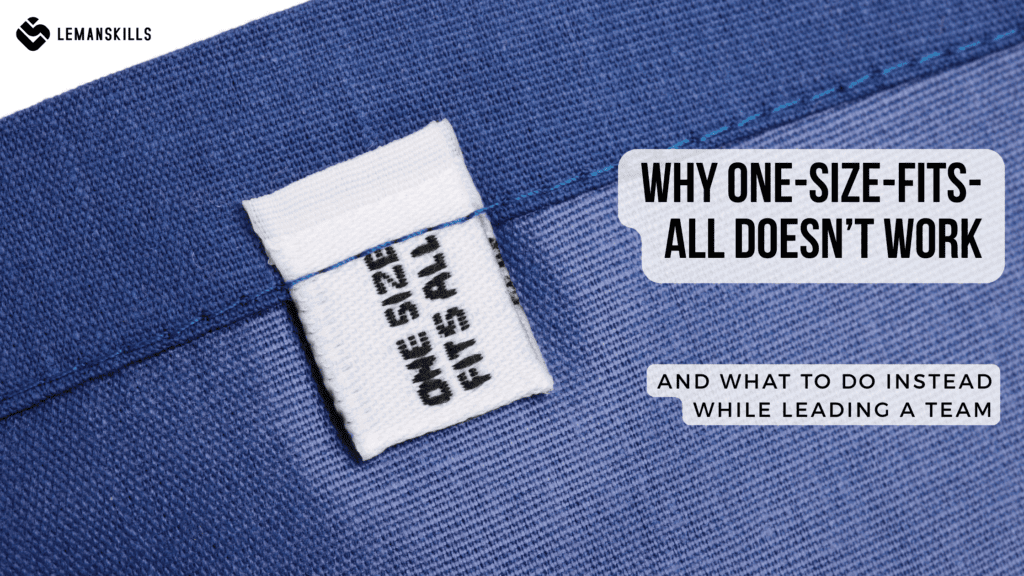
Why One Style Always Breaks Something
Gallup puts a number on how much this actually matters: managers account for at least 70% of the variance in team engagement scores across business units. Not compensation. Not perks. Not the mission statement on the wall. The person running the team.
That’s an enormous amount of leverage sitting in one relationship, and most leaders are running it on instinct, because nobody handed them a map (see the 60% above). The good news: the map exists, and it’s not new.
The Map: Situational Leadership
In the late 1960s, Paul Hersey and Ken Blanchard built a model that still holds up today: there is no single best leadership style, only the style that fits the person and the task in front of you. Their framework, now taught through the Center for Leadership Studies and used to train over 15 million managers worldwide, breaks leadership approach into four modes: directing, coaching, supporting, and delegating.
Here’s the part most people misapply. It’s not “give the senior person freedom and the junior person structure.” It’s about readiness for the specific task, not tenure or job title. A senior engineer stepping into a brand-new domain (a new cloud platform, a first AI project) can need just as much direction as a first-year hire. A junior person who has mastered one narrow piece of the codebase might be ready for full delegation on that piece, and nothing else yet. Match the style to the task, not the resume.
That alone would have solved half of the problem. But there’s a second layer that this approach is missing entirely, and it’s the one I spend most of my time on with the leaders I work with.
The Layer Situational Leadership Doesn’t Cover: How the Direction Should Feel
Situational Leadership tells you how much direction someone needs. It doesn’t tell you what kind of direction actually lands with them. That’s where the Process Communication Model (PCM) comes in, and it’s a piece I weave into almost every CQ Leadership Method conversation I have with clients.
Two people can both need “high direction” on a task and still need it delivered in completely opposite ways:
A Base Thinker wants direction as data: clear scope, a deadline, the logic behind the decision. Hand them a vague “let’s figure it out together” and watch their trust in you drop.
A Base Harmonizer wants that same direction wrapped in warmth: acknowledge the relationship first, then the task. Skip that step, and the exact same instructions will land as cold, even harsh.
A Base Promoter wants direction that gets to the action fast, with room to move. Over-explain the “why” and you’ll lose them halfway through your sentence.
A Base Rebel needs the same instruction with some energy and playfulness attached, or it reads as a lecture.
This is why “matching your style to the person” isn’t just about backing off with your senior people and leaning in with your junior ones. It’s a two-axis problem: how much direction (Situational Leadership), and what shape that direction takes (PCM). Miss either axis and you get that mess: a senior person who feels babysat, and a junior person who feels abandoned, even though he used the same words with both.
Three Shifts to Make This Week
- Map readiness by task, not by tenure. For each person on your team, pick one current task and rate their readiness on it (not their general seniority). That’s your real starting point for how much direction to give.
- Ask, don’t guess, how they want it delivered. You don’t need a PCM certification to start. Ask directly: “Do you want me closer or further away on this one? Data first, or the big picture first?” That’s a five-second question that replaces months of guessing.
- Audit your default. Most leaders default to whichever style feels natural, which usually mirrors their own PCM base. If direction naturally comes out of you as data and logic, watch for the Base Harmonizers and Base Rebels on your team quietly checking out. If it comes out as warmth and story, watch for the Base Thinkers getting impatient.
None of this requires rolling out a personality test to your whole team. It requires you to actually look at the person in front of you before you open your mouth.
Which one of your people is currently getting the wrong kind of leadership from you: not too much or too little, but the wrong shape entirely?