


Mike’s HR team called me as a last resort. He was a brilliant technical lead, working 70- to 80-hour weeks, quietly on the edge of quitting, feeling like a failure despite being technically exceptional. His company didn’t want to lose him. He agreed to give leadership one more chance. And he wanted to do it by the book.
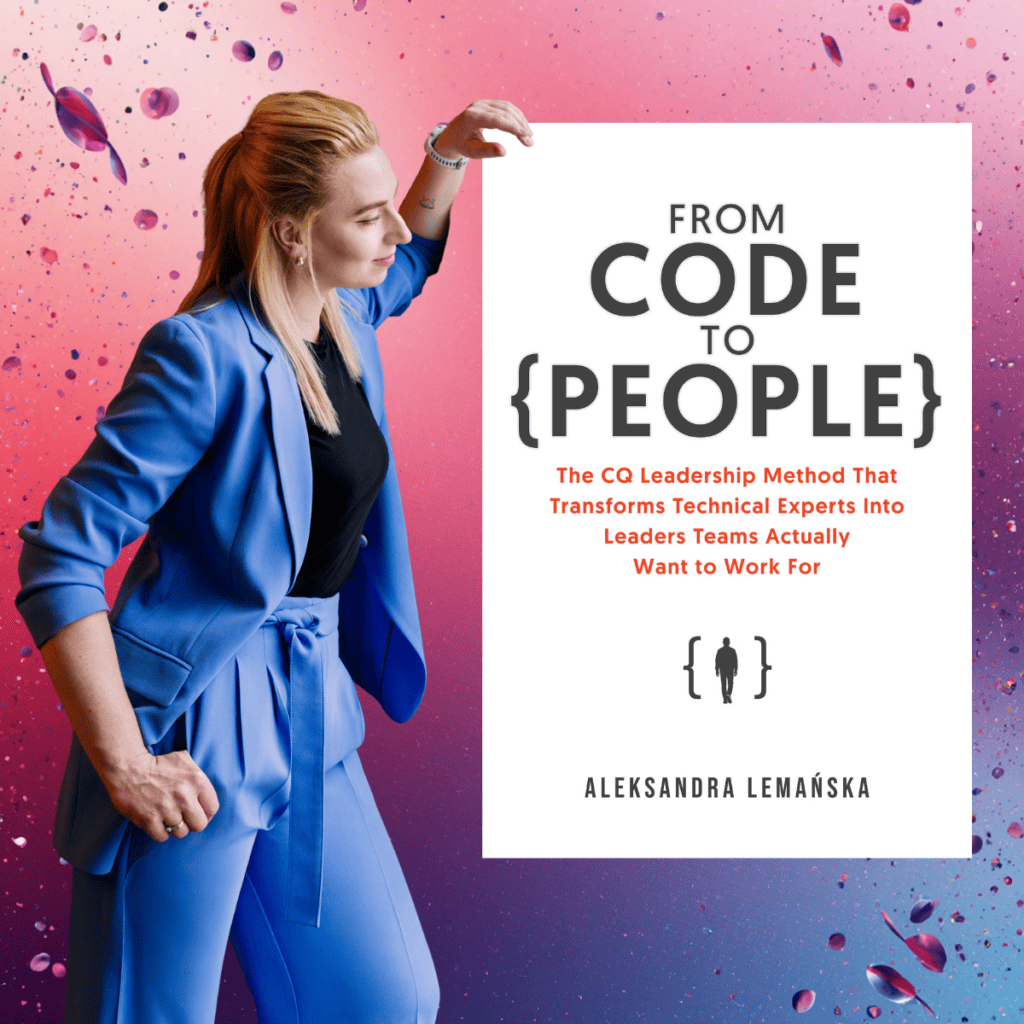
That call is the reason From Code to People exists. Not a marketing hook. Not a nice origin story for the back cover. It’s the actual moment that turned into a method, and then into a book.
If you’re leading (or trying to lead) a technology team right now, I want to tell you why I wrote it, what’s actually inside it, and why I believe it’s landing at exactly the right moment for people like you.
The Story You’ll Meet in the Book
Mike wasn’t failing because he lacked intelligence or dedication. He was failing because nobody had ever taught him that people aren’t problems to be debugged. He had one communication approach (the one that worked for him), and he ran it on everyone: his Thinker-Base engineers, his Promoter-Base product lead, his Harmonizer-Base designer. Same input, wildly different outputs, and he had no idea why.
When I introduced him to the Process Communication Model© and started building what later became the CQ Leadership Method, something shifted. He started recognizing distress patterns before they escalated. He learned that a Persister Base person on his team needed a very different kind of reassurance than a Rebel Base person did, and that giving the wrong one was making things worse, not better. Within months, he went from someone ready to quit leadership entirely to someone who actually enjoyed it.
That transformation is why Mike is the central character running through From Code to People. Not because his story is rare. Because it’s common enough that most of you reading this will recognize yourself in at least one part of it.
Why This Isn’t a Niche Problem
Here’s what the research says, and it says it loudly: research from the Center for Creative Leadership shows that up to 60% of new managers fail within their first 24 months, and inadequate preparation is the leading contributing factor. Not lack of talent. Lack of preparation.
Gallup’s research consistently shows that managers account for the majority of the variance in how engaged their teams are. And DDI’s Global Leadership Forecast found that only 19% of rising leaders have the delegation skills to actually operate as managers instead of senior individual contributors still doing the work themselves.
In technology, this gets amplified. We promote our best engineers into leadership because they were excellent at the technical work, then hand them a title and zero training in the one skill that now determines everything: how they communicate with humans who don’t think as they do. I wrote about this pattern in the number one struggle of brand new tech leaders, and the book is the deeper, structured answer to it.
Why Right Now, Specifically
There’s a second reason the timing matters, and it’s the one keeping most of you up at night: AI.
According to DHR Global’s 2026 Workforce Trends Report, 58% of tech employees are experiencing moderate to extreme burnout, the second highest rate of any industry. I broke down exactly how the AI mandate is quietly accelerating this in The Hidden Cost of AI Adoption Nobody Is Talking About. The short version: AI is removing the technical scaffolding that used to force human conversation (code reviews, status updates, documentation), and a lot of leaders are unconsciously cutting the human investment along with it.
That means the communication skills the book teaches aren’t a nice complement to your technical leadership anymore. They’re the thing standing between a team that adapts and a team that quietly burns out while hitting its Q2 targets. If you want the root-cause version of that, I go deep on it in Experiencing Burnout in IT? Here’s Why and in What Does a Communication Debt Really Cost Us?.
What’s Actually Inside From Code to People
This isn’t a theory book. It’s built to be used. Inside, you’ll find:
The complete CQ Leadership Framework – how to read your own communication style and the styles of the people you lead, built on the six Process Communication Model© Base types (you can get a first look at the framework here: PCM: Introductions).
The Distress Sequence First Aid guide – how to recognize the exact moment a team member (or you) is sliding from First Floor stress behaviors into full withdrawal, and what to do in that ten-minute window before it escalates.
Contracting Templates – practical scripts for the conversations most leaders skip, the ones that quietly build up into communication debt over months.
Wheel of Conflict Diagnostics – a structured way to figure out what’s actually driving a conflict on your team, instead of guessing and getting it wrong twice.
And running through all of it: Mike’s story, chapter by chapter, so the framework never stays abstract.
The Shift I Want You to Make Today
You don’t need the book to start. Here’s one thing you can do this week: pick one person on your team whose communication style consistently confuses or frustrates you, and instead of adjusting your message for volume (saying it louder, more often, more directly), adjust it for type. If you’re not sure where to start, the PCM motivational needs overview is a good place to look.
That’s the whole method in miniature: not more communication, better-targeted communication.
Are you leading like Mike was, technically brilliant and quietly running out of road? Or have you already found your own version of the shift?
From Code to People is there, available on Amazon! Grab your copy and share with people who can really use it! Go to: https://fromcodetopeople.lemanskills.com/.