


If you caught this week’s podcast episode, you already met Peter Murphy’s employee: the one who found out they were being fired in the same breath they found out their job had ever been at risk. “I don’t even know why,” they said. And Peter realized, in real time, that he had never said the hard thing out loud and clear. Not once. Not to the one person who needed to hear it.
I want to stay with that story for one more week, because “clear is kind, unclear is unkind” is easy to nod along to and genuinely hard to live.
I see the quieter version of Peter’s story constantly. A team lead I worked with had been “documenting concerns” about a senior engineer for three months: notes in a private doc, complaints to his own manager, a running mental case file. What he hadn’t done, not once in three months, was tell the engineer directly that the work wasn’t landing. When I asked why, he said, “I didn’t want to blindside him.” He blindsided him anyway, just later, and with less goodwill on both sides.
That’s the pattern. We tell ourselves we’re being considerate. What we’re actually doing is moving the conversation from a five-minute 1:1 to a three-month slow burn, then wondering why it explodes.
What Avoidance Actually Costs
This isn’t just a feelings problem; it shows up on a spreadsheet too. Research from Crucial Learning (formerly VitalSmarts) puts a number on it: every crucial conversation a leader avoids costs an organization roughly $7,500 and more than seven lost working days, once you account for the rework, the rumination, and the slow disengagement that fills the silence. A third of managers postpone a difficult conversation for a month or longer; a quarter put it off for a year or more. None of that time is neutral. It’s spent managing the tension instead of resolving it.
Where “Clear Is Kind” Actually Comes From
Peter gave me the line, but the research behind it belongs to Brené Brown. In Dare to Lead, her seven-year study of brave leadership, she found the same thing I find in every tech team I work with: we avoid clarity because we’ve convinced ourselves it’s the kind thing to do, when what we’re actually protecting is our own comfort. Feeding someone a half-truth so they feel better in the moment isn’t generosity. It’s a transfer of discomfort, from you to them, with interest.
The Trap: We Think Clear Means Blunt
Here’s where most tech leaders get stuck once they accept the mantra. They hear “clear is kind” and translate it into “just say it bluntly,” and then they either avoid the conversation twice as hard, or they walk in and steamroll someone who needed a different kind of clear.
Clear isn’t one tone. It’s one outcome: the other person leaves the room knowing exactly where they stand. How you get them there depends entirely on who’s sitting across from you, which is the whole premise of Communication Intelligence (CQ): you adapt the delivery, never the message.
Run this through PCM for a second. A Base Thinker hears “clear” as data: specific examples, a defined gap, a plan. Strip the emotion out, and they’ll trust you more, not less. A Base Harmonizer needs the same message wrapped in real warmth first, not softened content, just a human opening before the direct part. A Base Persister wants you to connect the issue to a principle they already hold, not just a task they missed. A Base Promoter wants you to skip the preamble entirely and get to what changes and by when. Same clarity, four different doors in.
I go deeper on matching delivery to personality base in Leading Tough Conversations, including a full walkthrough of how to structure the meeting itself. Worth a re-read alongside this one.
Three Shifts That Make This Practical
#1 Contract before you confront. Before the hard sentence comes out, set up the space: what this meeting is for, what role you’re both playing in it, and that it comes from wanting them to succeed, not from wanting to catch them out. I wrote a full breakdown of contracting a while back; the psychological layer is the one that makes the rest of the conversation land instead of bounce off.
#2 Say the sentence in the first two minutes, not the last two. If you’re circling the real issue through five minutes of small talk and a status update, you’re not being kind, you’re rehearsing avoidance out loud. Say the thing early. Everything after that is easier because the other person isn’t spending half the meeting waiting for the other shoe to drop.
#3 Curiosity comes after clarity, never instead of it. Once you’ve named the issue plainly, that’s your cue to ask what’s going on, what they need, what would make this easier. Skipping straight to curiosity without ever naming the problem gets you a warm conversation that changes nothing, which is exactly the trap the team lead I mentioned fell into for three months.
Your Turn
Think of the conversation you’re currently drafting in your head instead of having out loud. Now be honest: is the delay actually about giving them space, or is it about giving yourself more time to avoid the discomfort? If a hard conversation ever makes someone say “wait, since when is this a problem?”, that surprise was never theirs to carry. It was yours.
Clear is kind. Unclear is cowardice with good PR, borrowed time you’ll pay back with interest.
Keep Going
If this is useful, the CQ Leadership Method page has the full framework behind everything above, and the FREE Tech Leadership Masterclass walks through one piece of it live. For the book that started this whole thread, Kim Scott’s Radical Candor is still the best field guide I know for caring personally while challenging directly.
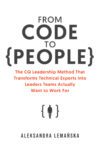
And if you haven’t yet, grab your copy of “From Code to People“!