Remember 2021? When did it feel like everyone and their neighbor was quitting their job? The Great Resignation dominated headlines—millions of people walking away from their roles every single month. Media outlets couldn’t stop talking about it.
Fast forward to today, and the pendulum has swung hard in the opposite direction.
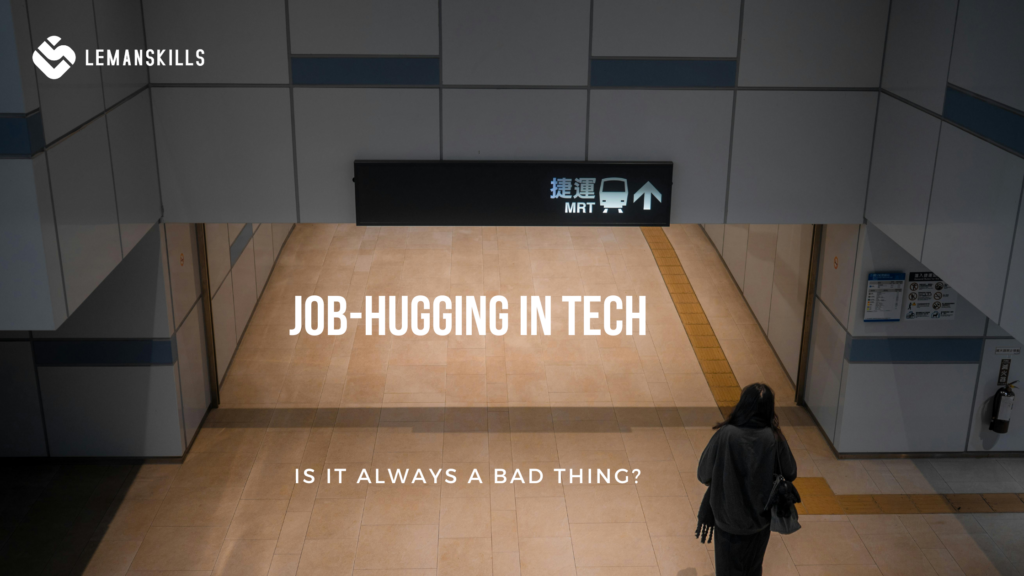
Welcome to the era of job-hugging.
What the Numbers Are Telling Us?
According to Monster’s 2025 Job Hugging Report, the landscape has completely shifted. Here’s what’s happening:
- 48% of workers admit they’re staying in their current roles longer than they otherwise would—driven by comfort, security, and stability
- 75% plan to remain in their current position for at least the next two years
- 85% say they’ve practiced job-hugging at some point in their career
- Voluntary departures have dropped from 4.5 million monthly (November 2021 peak) to around 3.2-3.3 million today
The trend isn’t slowing down. 59% of workers say job-hugging is more common in 2025 than it was last year, and 63% expect it to grow even stronger in 2026.
The top reasons people are staying put? Compensation and benefits (27%) and job security (26%).
This isn’t just data. This is a fundamental shift in how people think about their careers.
When Job-Hugging Makes Sense?
Let me be clear about something: job-hugging isn’t inherently good or bad. It’s a tool. And like any tool, context matters.
Sometimes staying is the smartest decision you can make.
Maybe you have a mortgage. Maybe your partner just switched jobs, and you need the stability. Maybe you’re dealing with health issues—yours or a family member’s. Maybe you’re simply exhausted from the mental load of the past few years and don’t have the bandwidth for a job search right now.
All of these are valid reasons.
Job searching is work. It’s additional, unpaid work on top of your already full plate. Not everyone has the energy for that, and that’s okay.
But here’s where it gets interesting: job-hugging can actually work in your favor if you’re intentional about it.
Staying in your current role makes sense when you’re:
- Taking on new projects that stretch your capabilities
- Learning from people outside your immediate team
- Building deep expertise that compounds over time
- Developing relationships that open doors internally
- Getting exposure to different parts of the business
The keyword here? Intentional.
Because staying by default and staying by design are two completely different strategies.
The Trap Nobody Talks About
Here’s the uncomfortable truth: many teams right now are full of people who’ve mentally checked out but physically stayed.
That’s not stability. That’s inertia masquerading as strategy.
The Monster report revealed some telling emotional trade-offs:
- 38% say job-hugging has no real impact on their satisfaction
- 27% feel less satisfied and “stuck” in their roles
- 25% feel more satisfied, citing security and value
When it comes to career growth, workers are similarly divided:
- 47% say it has little effect
- 27% see it as limiting advancement
- 26% believe it builds expertise
And here’s what concerns me most: 94% of workers recognize there are risks to job-hugging. The top concerns? Missing out on higher pay (26%), burnout from lack of change (25%), and limited career advancement (25%).
So people know. They know they’re potentially trading long-term growth for short-term comfort. But they’re doing it anyway.
The Real Question Leaders Should Be Asking
If 75% of your team plans to stay through 2027, what are you doing to ensure they’re growing, not just showing up?
This is where most organizations are failing spectacularly.
See, employers love job huggers. The same Monster report shows that companies value them for loyalty (26%), institutional knowledge (22%), and lower turnover costs (30%).
But here’s the problem: just because someone is staying doesn’t mean they’re engaged. It doesn’t mean they’re motivated. And it definitely doesn’t mean they’re performing at their best.
In my work with tech leaders through the CQ Leadership Method, I see this pattern constantly:
Teams filled with talented people who are… fine. Not thriving. Not building. Not pushing boundaries. Just… there.
They show up to meetings. They complete their tasks. They don’t rock the boat. But they’re not bringing the energy, creativity, or commitment that actually moves organizations forward.
And leaders? They’re often relieved people aren’t quitting, so they don’t dig deeper.
What Communication Intelligence Reveals About Job-Hugging?
When I work with teams using Process Communication Model® (PCM), one of the first things we uncover is how people’s motivational needs are—or aren’t—being met.
People don’t just stay in jobs for money and benefits, despite what they tell surveys. They stay (or leave) based on whether their core psychological needs are being fulfilled.
For some people, job-hugging might feel safe because their need for structure and recognition is being met. For others, it’s a quiet desperation—they need challenge, growth, and autonomy, but fear has them frozen in place.
The difference between strategic job-hugging and career stagnation often comes down to this: Are you having real conversations about what people actually need to grow?
Not surface-level check-ins. Not performance reviews that feel like box-ticking exercises.
Real conversations. The kind where you ask:
- “What do you want to learn this year that you don’t know how to do right now?”
- “What projects would energize you?”
- “What’s one thing that, if we could change it, would make you more excited to be here?”
These conversations require Communication Intelligence (CQ)—the ability to recognize that different people are motivated by different things, and to tailor your leadership approach accordingly.
What Actually Works: Moving From Job-Hugging to Strategic Growth
If you’re a leader right now, here’s what I’d encourage you to do:
- Acknowledge the reality
Don’t pretend the economic uncertainty isn’t real. Don’t downplay people’s legitimate concerns about stability. Meet them where they are.
- Create visible growth paths
If people are going to stay for two years, show them what growth looks like internally. Not vague “development opportunities”—specific projects, skills, and experiences they can pursue.
- Make development a performance metric
Track it. Talk about it in 1:1s. Make it as important as hitting quarterly goals. Because if you only measure output, people will optimize for staying safe and meeting minimums.
- Model intentional staying
If you, as a leader, have chosen to stay, talk about why. Share the projects you’re excited about. Show your team what strategic job-hugging looks like in practice.
- Create safety to talk about leaving
Yes, you read that right. Make it okay for people to say “I’m thinking about what’s next.” When people can be honest about their career trajectory, you can actually help them find opportunities internally before they start job hunting secretly.
The Bottom Line
Job-hugging can be brilliant career management. It can also be a slow descent into irrelevance.
The difference isn’t whether you stay or go. It’s whether you’re actively shaping your growth or passively hoping things will change on their own.
For leaders: if 75% of your team is planning to stay for two years, you have an incredible opportunity. You can either coast on that stability and watch your team quietly disengage, or you can invest in making those two years transformational.
For individual contributors: staying put doesn’t have to mean standing still. But it does require you to be honest about why you’re staying and what you’re building while you’re there.
Because at the end of the day, the question isn’t “Should I stay or should I go?”
The real question is: “What am I doing with the time I have?”
PS. Want to build a team where people choose to stay AND grow? The CQ Leadership Method helps tech leaders create environments where retention doesn’t come at the cost of development. Join the FREE Leadership Masterclass, and see what’s possible!